
Selling a home in New Zealand follows a fairly set path, but the first time through it can feel like a series of decisions you are not quite ready to make. What is the place worth? Which agent? Auction or negotiation? What happens once someone makes an offer? This guide walks the whole journey from your first thought about selling to handing over the keys, in plain language and in order. Selling is rarely just a transaction. Often it is the close of one chapter, leaving the home where the children grew up, or the step that lets you move somewhere safer or simpler for the next stage of life. Understanding the process takes the fear out of it, so you can focus on the move rather than the mechanics. Nothing here is personalised advice; it is general guidance current at the time of writing, and your own agent and lawyer will steer the specifics for your sale.
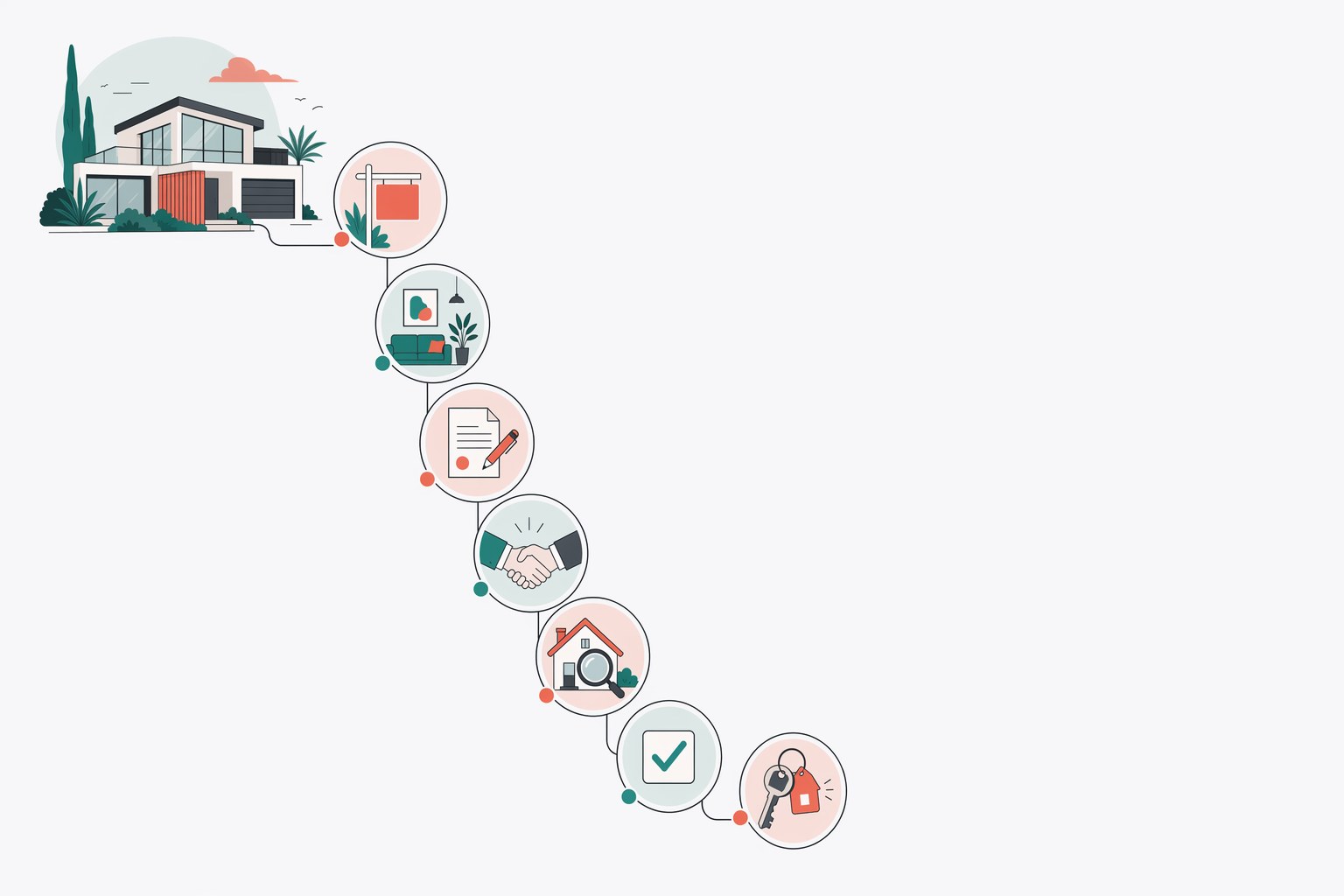
The selling process from start to finish
At a high level, a typical New Zealand sale runs like this. You get an indicative appraisal and decide to sell. You choose a licensed agent and sign an agency agreement. Together you pick a method of sale, auction, deadline sale or price by negotiation, and agree a marketing plan. The home is prepared and presented, then marketed, usually with open homes over a campaign of a few weeks. Buyers make offers; you negotiate; at some point an offer is accepted. If the offer is conditional, the buyer works through their conditions, finance, builder's report, LIM, and once those are met the contract goes unconditional and becomes binding. Then comes the settlement period, ending on settlement day when the money changes hands and the buyer takes possession. Each step is covered below. The timeline varies with the method of sale, the region and the market, but the sequence stays much the same.
Appraisal and the agency agreement
It starts with knowing roughly what your home is worth and what it will cost to sell. An agent appraisal gives you an indicative price range based on the property and recent comparable sales; it is a guide, not a registered valuation, and it is not binding. Get a feel for the costs too, commission, marketing and legal fees, so the final figure does not surprise you. When you choose an agent, you sign an agency agreement, the contract that sets out the commission, the term, the marketing costs and whether it is a sole or general agency. Read it carefully and make sure it matches what you discussed; your lawyer can review it before you sign. Our guides on appraisals and valuations, on agent commission and selling costs, and on agency agreements explain each piece, and you can request a free indicative appraisal to get started without committing to anything.
Choosing your method of sale
New Zealand sellers usually choose between three main methods, and the right one depends on your property, your area and the market. An auction sets a date and invites unconditional bids on the day, which can create competition and a quick result but requires buyers to do their checks in advance. A deadline sale, sometimes called a tender, invites offers by a set date, which can be conditional, giving you a pool of offers to consider. Price by negotiation, with or without an advertised price, lets buyers come forward over a longer window and suits properties where the value is harder to pin down. Each method changes how buyers behave and how the campaign feels. Your agent will recommend a method for your situation and explain why. Our auction vs negotiation guide lays out the pros and cons of each so you can have an informed conversation rather than simply taking the first suggestion.
Marketing and open homes
Once the method is set, the home is prepared and the campaign begins. Presentation matters: a tidy, decluttered, well-maintained home photographs better and shows better, and sometimes light staging is worth it. Good photography and a clear listing on the major portals do a lot of the early work, since most buyers look online first. Open homes and private viewings then let interested buyers experience the place in person, and your agent gathers feedback and gauges genuine interest along the way. Marketing usually costs extra on top of commission, so agree what you are paying for up front. The aim across the campaign is to reach the right buyers and build competitive interest by the time offers or the auction come around. Our guides on preparing your house for sale and on staging, marketing and prep to sell cover the high-value, low-cost moves that help your home stand out.
Offers, conditions and going unconditional
When a buyer is keen, they make an offer, usually on the standard sale and purchase agreement. An offer can be unconditional, meaning binding straight away, or conditional, meaning it depends on the buyer satisfying things like finance, a builder's report, a LIM or the sale of their own home. You can accept, decline or counter, and there is often some negotiation on price and terms before both sides sign. Once signed, a conditional contract gives the buyer a set time to work through their conditions. As each is satisfied or waived, you move toward the contract going unconditional, the point at which all conditions are met and the sale is locked in, heading to settlement. Until then, a conditional sale can still fall over, so experienced agents and your lawyer help you weigh competing offers and read the conditions carefully. Our sale and purchase agreement and settlement guide explains the contract in plain terms.
Settlement day and handover
After the contract goes unconditional, you enter the settlement period, the agreed run-up to settlement day. Your lawyer handles the legal transfer, and you keep preparing to move out. On settlement day, the buyer's payment is made through the lawyers, the title transfers, and possession passes to the buyer, usually with keys handed over once funds have cleared. The commission and any agreed costs come out of the proceeds, and the balance is yours. Make sure the chattels listed in the agreement, the moveable items included in the sale, are present and in the agreed condition, and that the home is left clean and clear as required. Then it is done: one chapter closed, the next one beginning. If you would like help with any step, from the first appraisal to the final handover, we can match you with a licensed local agent, free and with no obligation.
In plain English: In plain English: appraisal and agent first, then pick a method of sale, run the marketing campaign, accept an offer and work through any conditions until it goes unconditional, then settle and hand over the keys.
General information, not personalised real-estate, legal or financial advice. Confirm your situation with a licensed adviser. Read the full disclaimer →