
Deciding between an apartment and a house is really a decision about how you want to live and how you want your money to work. In New Zealand, a house usually means land of your own, a backyard and room to grow, while an apartment offers a lower-maintenance, often more central and affordable way into the market. Each comes with different ownership structures, ongoing costs and resale dynamics, and the right answer depends as much on your lifestyle and stage of life as on the numbers. Whether you're a first-home buyer getting a foothold, a downsizer wanting to simplify, or a family planting roots, this guide lays out the trade-offs honestly so you can choose a home that feels secure and suits the life you're building. Financial and ownership points here are general guidance, so confirm the specifics for any property with your lawyer.
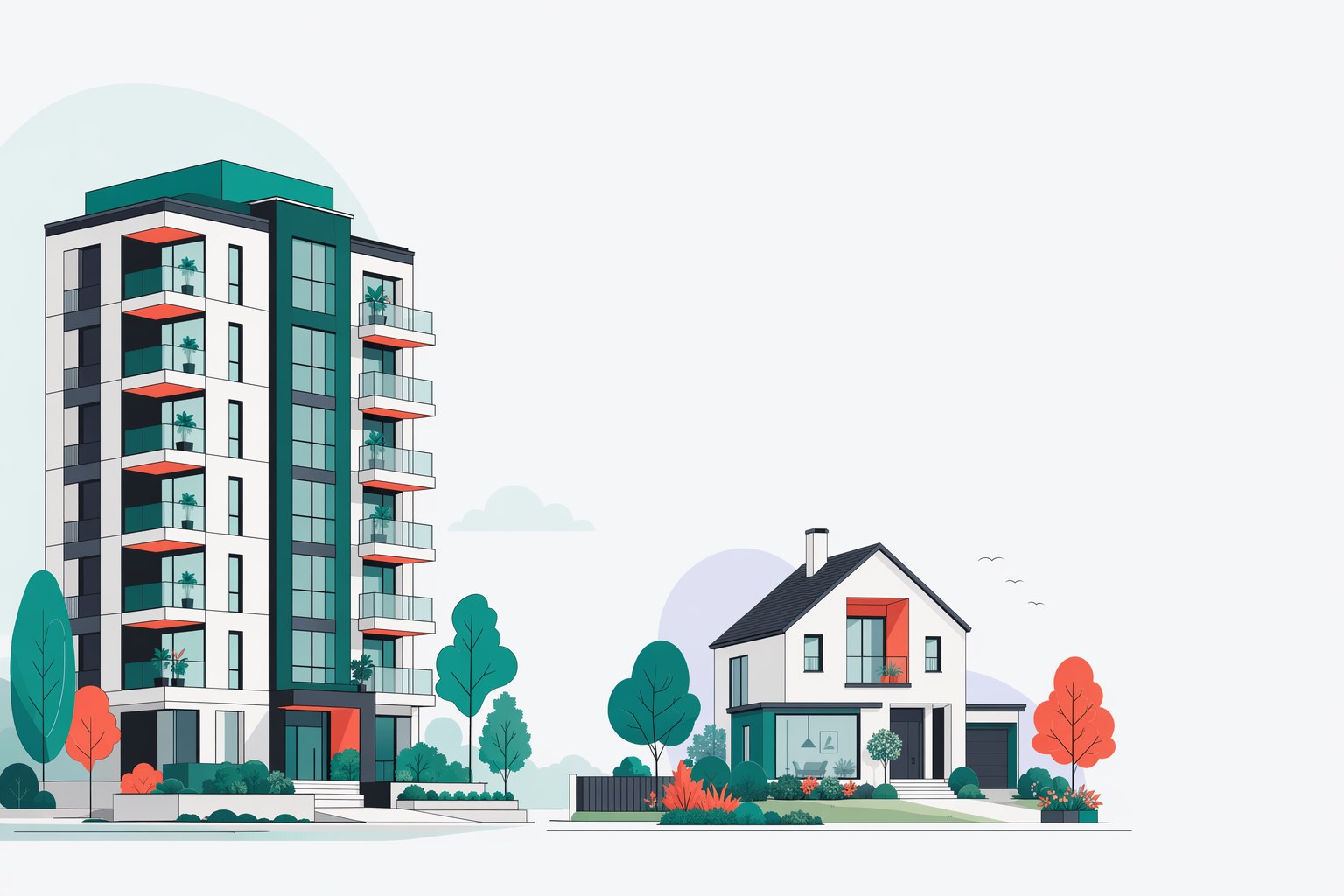
The short answer
A house typically gives you freehold land, more space, privacy and control, and land has historically been the main driver of long-term capital growth in New Zealand, but it comes with higher prices, more maintenance and all the upkeep of a section. An apartment is usually more affordable and more central, with far less maintenance because the building and grounds are managed collectively, making it ideal for lock-and-leave living, but it comes with a body corporate, regular levies, shared decision-making, and an ownership type (commonly unit title) that buyers need to understand. There's no universally better choice. A house often suits families wanting space and land for the long term; an apartment often suits first-home buyers, downsizers, professionals and investors who value affordability, location and low maintenance. The key is to look past the sticker price at the ongoing costs, the ownership structure and how each fits the way you actually want to live.
House: the case for it
Buying a house usually means owning the land it sits on, and land is what tends to appreciate most over the long run in New Zealand, which is a big reason houses are often seen as the stronger capital-growth play. You get space, privacy and control: a backyard for children or pets, room to extend or add a minor dwelling later, and freedom to renovate without needing anyone else's sign-off. For families putting down roots, that sense of having your own patch of ground is deeply reassuring. The trade-offs are cost and effort. Houses generally cost more to buy, especially in central areas, and all the maintenance, from the roof to the lawn, falls to you, in both time and money. Houses are also often further from city centres, which can mean longer commutes. A house suits buyers who want space, land and long-term growth, who are happy to take on upkeep, and who value privacy and the freedom to make the property truly their own.
Apartment: the case for it
An apartment can be the smart, lower-stress way to own in New Zealand, particularly if location matters more to you than land. Apartments are often more affordable than houses in the same area and tend to be central, putting you close to work, transport and city life. Maintenance is largely handled collectively, so you're not mowing lawns or replacing roofs yourself, which makes apartments ideal for busy professionals, downsizers wanting to simplify, frequent travellers, and first-home buyers getting onto the ladder. The trade-offs centre on the shared nature of ownership. Most apartments are unit title, which means you own your unit and share the common areas, and you'll belong to a body corporate that manages the building and charges regular levies, so it's vital to check those levies and the building's financial health before you buy. Apartments may also show slower land-driven capital growth than houses, and resale can depend on the building's reputation and condition. An apartment suits buyers who prize location, affordability and low maintenance, and who are comfortable with collective ownership.
How to decide for your situation
Begin with your stage of life and how you want to live day to day. If you have or are planning a family and want space, a backyard and room to grow, a house earns its premium. If you want to be central, travel light, or are downsizing and simplifying, an apartment's lock-and-leave ease is a real gift. Next, look hard at the full cost, not just the purchase price: a house carries maintenance you'll fund yourself, while an apartment carries body corporate levies you must budget for, so request and read the body corporate financials and minutes before committing. Then think about ownership type and what it means for alterations and resale, since a unit-title apartment behaves differently from a freehold house. Consider capital growth too, remembering that land has historically led growth, though location and quality matter enormously for both. Finally, factor in resale: a well-run building or a house in a sought-after street both hold appeal, while a troubled body corporate can hurt an apartment's value. The right home balances your lifestyle, your budget and your long-term plans.
Get help making the call
Weighing an apartment against a house brings together lifestyle, finance and the finer points of property ownership, so it pays to have someone knowledgeable in your corner. Maifang is free and independent, with no ties to any agency or developer, so the guidance is on your side. We can match you with a licensed local agent who understands both the apartment market and the houses in your area, help you understand the buying process and the checks that protect you, and point you to clear explanations of unit title and body corporate matters so an apartment holds no surprises. There's no obligation and your details stay private. Whether you're after land and space or low-maintenance central living, the goal is the same: a home where you can feel settled, secure and at ease for the long haul.
In plain English: A house gives you land, space and privacy and has historically led capital growth, but costs more and needs more upkeep. An apartment is usually cheaper, more central and low-maintenance, but comes with a body corporate and levies to check carefully. Choose by lifestyle, full ongoing cost and your long-term plans, not the purchase price alone.
General information, not personalised real-estate, legal or financial advice. Confirm your situation with a licensed adviser. Read the full disclaimer →