
One of the most overlooked but important things to check before you buy a home in New Zealand is the type of title it has. Two homes that look identical from the street can be very different to own, depending on whether they're freehold, cross-lease or unit title. The title type affects what you can build or alter, how decisions about shared areas get made, what ongoing costs you face, and even how easy the home is to sell later. None of these ownership types is bad, but each carries its own rights, restrictions and quirks, and understanding them before you commit protects you from nasty surprises. This guide explains all three in plain English so you can buy with your eyes open. Title matters are legal, so always have a lawyer review the actual title for any property before you sign.
The short answer
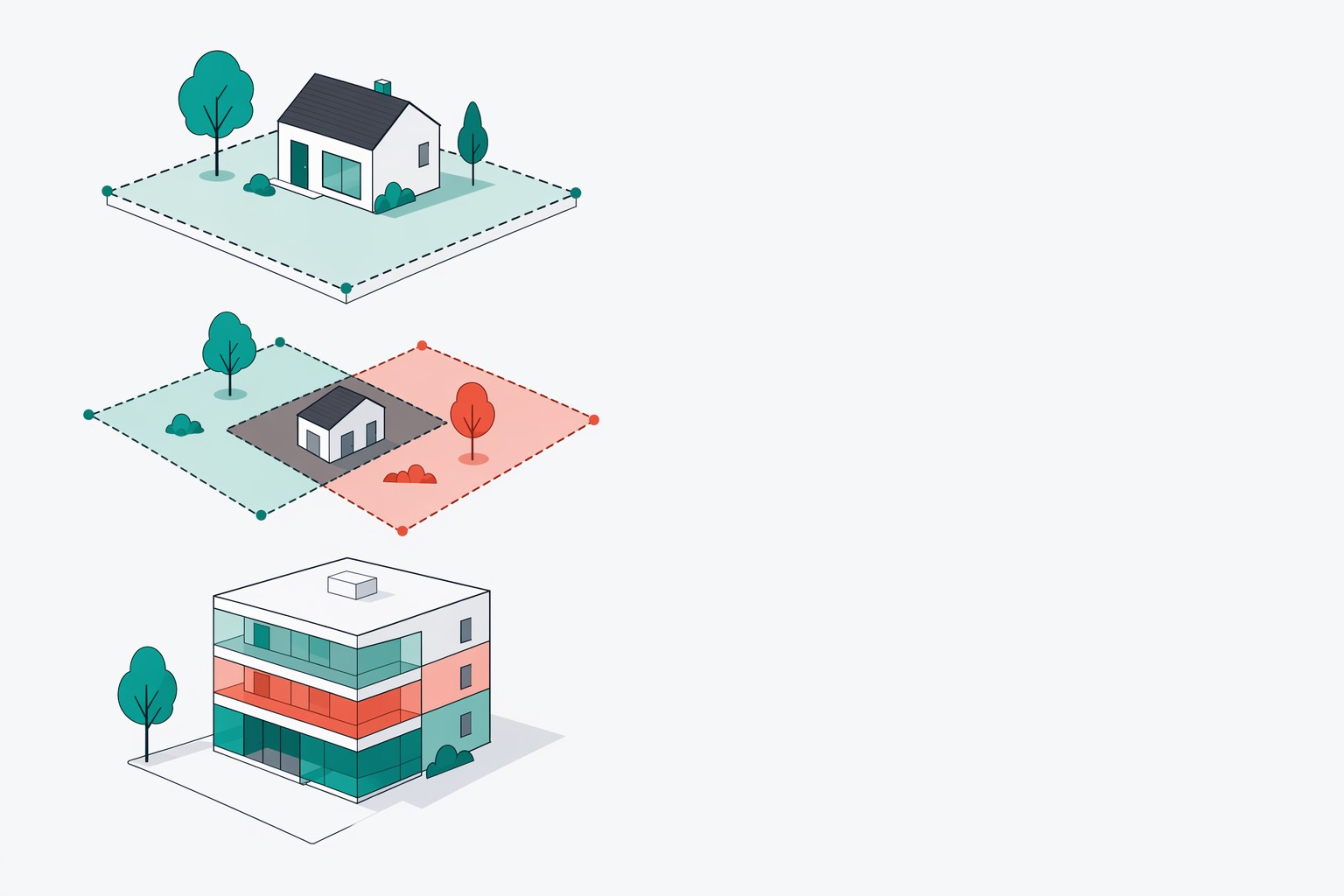
Freehold (also called fee simple) is the most straightforward and generally most sought-after ownership type: you own the land and everything on it outright, with the fewest restrictions, which is why freehold homes are often the easiest to alter and to sell. Cross-lease is more complex: you own a share of the underlying land jointly with the other cross-lease owners, and you lease your specific dwelling from that shared ownership, which means alterations and additions usually need the other owners' consent and the legal records (the flats plan) must match reality. Unit title is the structure used for most apartments and many townhouses: you own your individual unit and share the common property through a body corporate that manages the building and charges levies. In short, freehold offers the most freedom, cross-lease introduces shared land and consent requirements, and unit title brings collective ownership with a body corporate. Each can be a fine home to own, but they behave very differently, so the title type should shape how you assess any property.
Freehold: what to know
Freehold, or fee simple, means you own the land and the buildings on it outright, subject only to general rules like council requirements and any registered easements or covenants. It carries the fewest restrictions of the three types, so you generally have the most freedom to renovate, extend, or add a minor dwelling, within council rules, without needing a neighbour's permission. That freedom and simplicity make freehold homes broadly the most appealing to buyers, which tends to support both value and ease of resale. For someone wanting to truly put down roots, make a place their own over the years, and avoid shared decision-making, freehold is usually the cleanest path. The main caveat is that freehold homes, especially standalone houses on their own section, often command a higher price for exactly these reasons. Even with freehold, you should still have your lawyer check the title for any covenants, easements or rights of way that could affect what you can do with the property.
Cross-lease and unit title: what to know
Cross-lease ownership is common in older subdivided sections in New Zealand and is more intricate than it first appears. You jointly own the whole piece of land with the other cross-lease holders, and you lease your particular flat or house from that shared ownership, with the layout recorded on a flats plan. The practical consequences are real: changes to your dwelling, such as extensions, decks or even some structural alterations, typically need the consent of the other cross-lease owners, and if a previous owner altered the home without updating the flats plan, the title can be defective, which can complicate finance and resale until it's fixed. Unit title, by contrast, is the structure behind most apartments and many townhouses. You own your unit outright and share the common property through a body corporate, which manages and maintains the shared building and grounds and charges regular levies. Before buying a unit title property, it's essential to check the levies, the body corporate's financial reserves, and its minutes for disputes or looming major repairs. Both cross-lease and unit title can be perfectly good homes, but they require extra due diligence and a careful read of the legal documents by your lawyer.
How to decide for your situation
Start by identifying the title type early, ideally before you fall in love with a place, because it shapes everything that follows. If you want maximum freedom to alter and extend, the simplest ownership, and the broadest buyer appeal when you eventually sell, freehold is the natural fit, accepting that it usually costs more. If you're considering a cross-lease, plan to have your lawyer scrutinise the flats plan against the actual building to make sure they match, and understand that future alterations will likely need the other owners' agreement; a well-maintained, defect-free cross-lease can still be a great home and is often more affordable. If you're looking at an apartment or townhouse, expect unit title, and budget for body corporate levies while carefully reviewing the body corporate's finances and history. Across all three, think about resale: freehold tends to be easiest, while cross-lease and unit title properties sell best when the legal records are clean and the shared arrangements are well run. The smartest move is to let the title type inform your offer and your checks, with your lawyer reading the actual title before you commit.
Get help making the call
Understanding what you're actually buying is one of the best protections you have, and you don't have to figure out title types alone. Maifang is free and independent, with no ties to any agency, so the guidance is on your side. We can match you with a licensed local agent who can flag the title type and its implications on properties you're considering, help you understand the buying process and the legal checks that keep you safe, and point you to plain-English explanations of unit title and cross-lease so nothing on the contract is a mystery. We always recommend a lawyer review the title for any home before you sign. There's no obligation and your details stay private. Buying a home should feel like a secure step forward, and knowing exactly what your title gives you is a big part of that confidence.
In plain English: Freehold means you own the land outright with the most freedom and the broadest buyer appeal. Cross-lease means you share land ownership and usually need the other owners' consent to alter your home, with the flats plan needing to match reality. Unit title (most apartments) means you own your unit and share common areas through a body corporate that charges levies. Always have a lawyer check the actual title before you buy.
General information, not personalised real-estate, legal or financial advice. Confirm your situation with a licensed adviser. Read the full disclaimer →